Tag: ansi
-

Don Lokke and “Mack the Mouse”: ANSI art and webcomics, Part 5
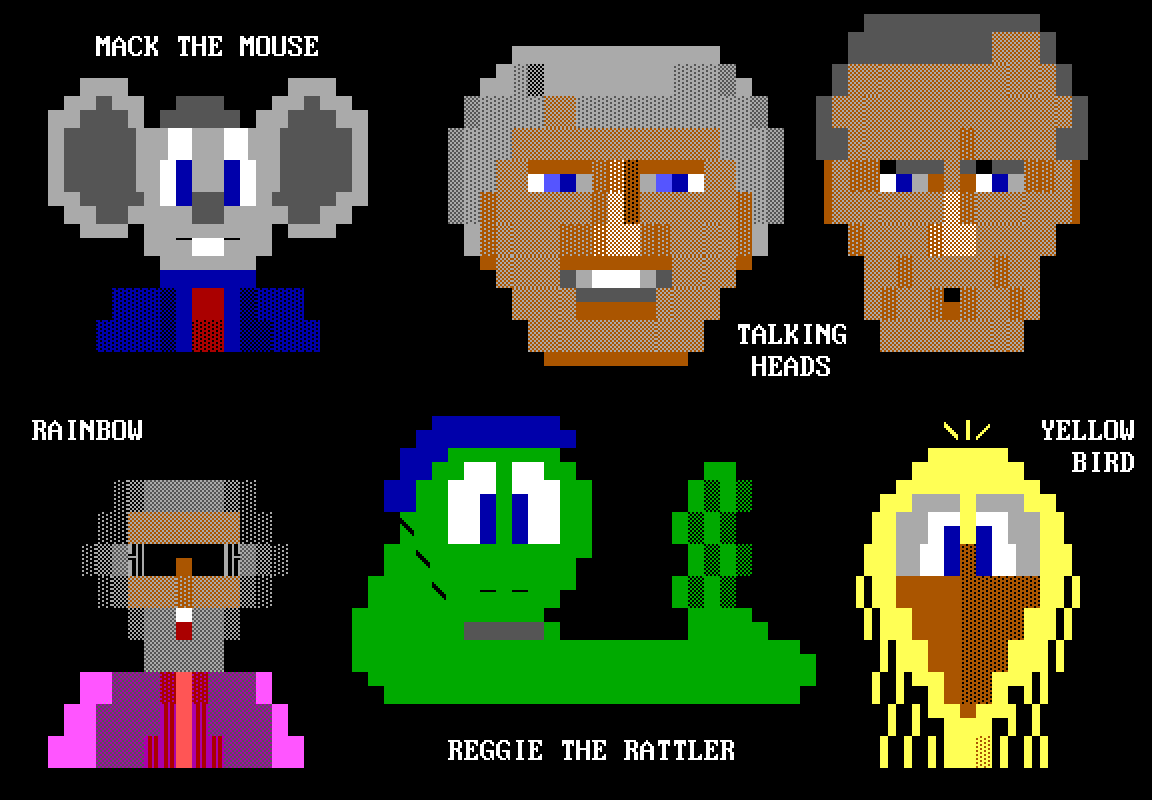
This is the final part of a multi-part series. In an alternate universe somewhere, nobody has heard of “webcomics.” Instead, there are thousands of “telecomics.” Thirty years ago, Don Lokke Jr. hoped to make that universe a reality. In 1992, he coined the term “telecomics” to describe his new digital comic strips, drawn primarily in…
-

The business of BBSing: ANSI art and webcomics, Part 4
This is the fourth part of a multi-part series. Once upon a time, drawing comics in daily newspapers could be lucrative. In the 1950s, Al Capp, the creator of “Li’l Abner,” was pulling in $500,000 a year — about $6 million today. He was a genuine celebrity, making guest appearances on talk shows and even…
-

Eerie and “Inspector Dangerfuck”: ANSI art and webcomics, Part 3
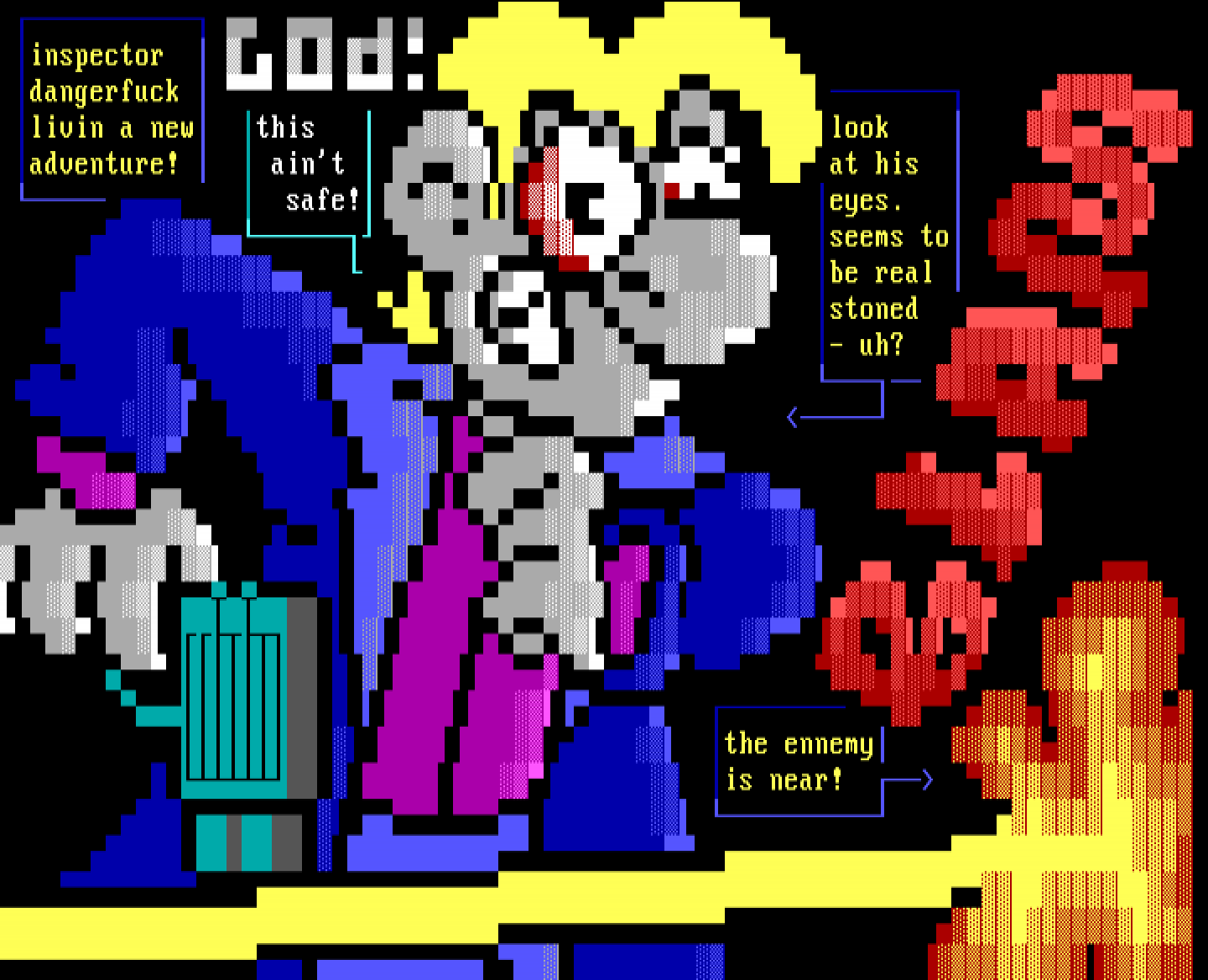
This is the third part of a multi-part series. “I’ve always been kind of restless,” says Eerie, the ANSI artist who created the character “Inspector Dangerfuck” in 1994. Today, Eerie is a musician and author, with a deep knowledge of cartoons and comics. But back then, he was a teenager in Quebec trying to make…
-

BBSes and the artscene: ANSI art and webcomics, Part 2
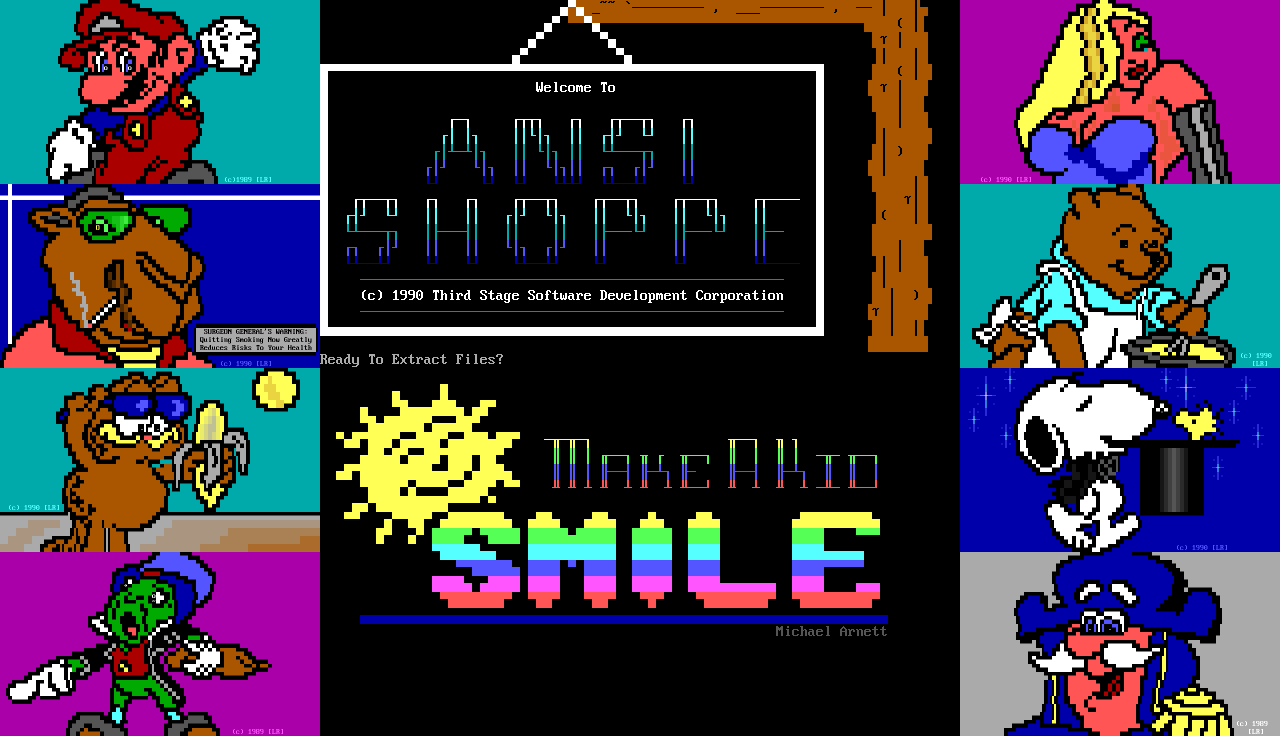
This is the second part of a multi-part series. Both Eerie and Don Lokke emerged from opposite ends of the ANSI art spectrum. But … what is “ANSI art”? Before we can profile the two main subjects of this series or explore their work, it’ll be important to understand the BBSing subculture of the early…
-

Filling in the blanks: ANSI art and webcomics, Part 1
This is the first part of a multi-part series. Does ANSI art have a place in the history of webcomics? One of the first chroniclers of webcomics history thought so. In the first chapter of his 2006 book, “A History of Webcomics,” T Campbell tackled the “prehistory” of webcomics by discussing ARPAnet, ASCII art, and…
-

The college basketball bracket … in ANSI
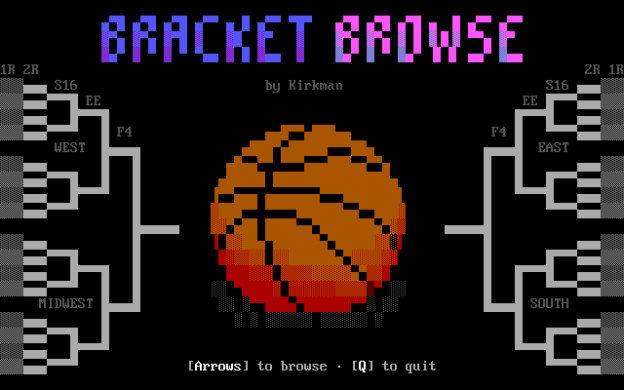
Eleven years ago, when I worked as a designer of news and sports pages at a daily newspaper, I created a system to automate the production of our college basketball brackets in print. One year prior, data journalist Aaron Bycoffe pointed out on Twitter that NCAA.com was using a nice, clean JSON feed to power…